
Why Massage Became Part of My Bodybuilding Routine: A Personal Trainer’s Perspective By Audrey Lemberger
/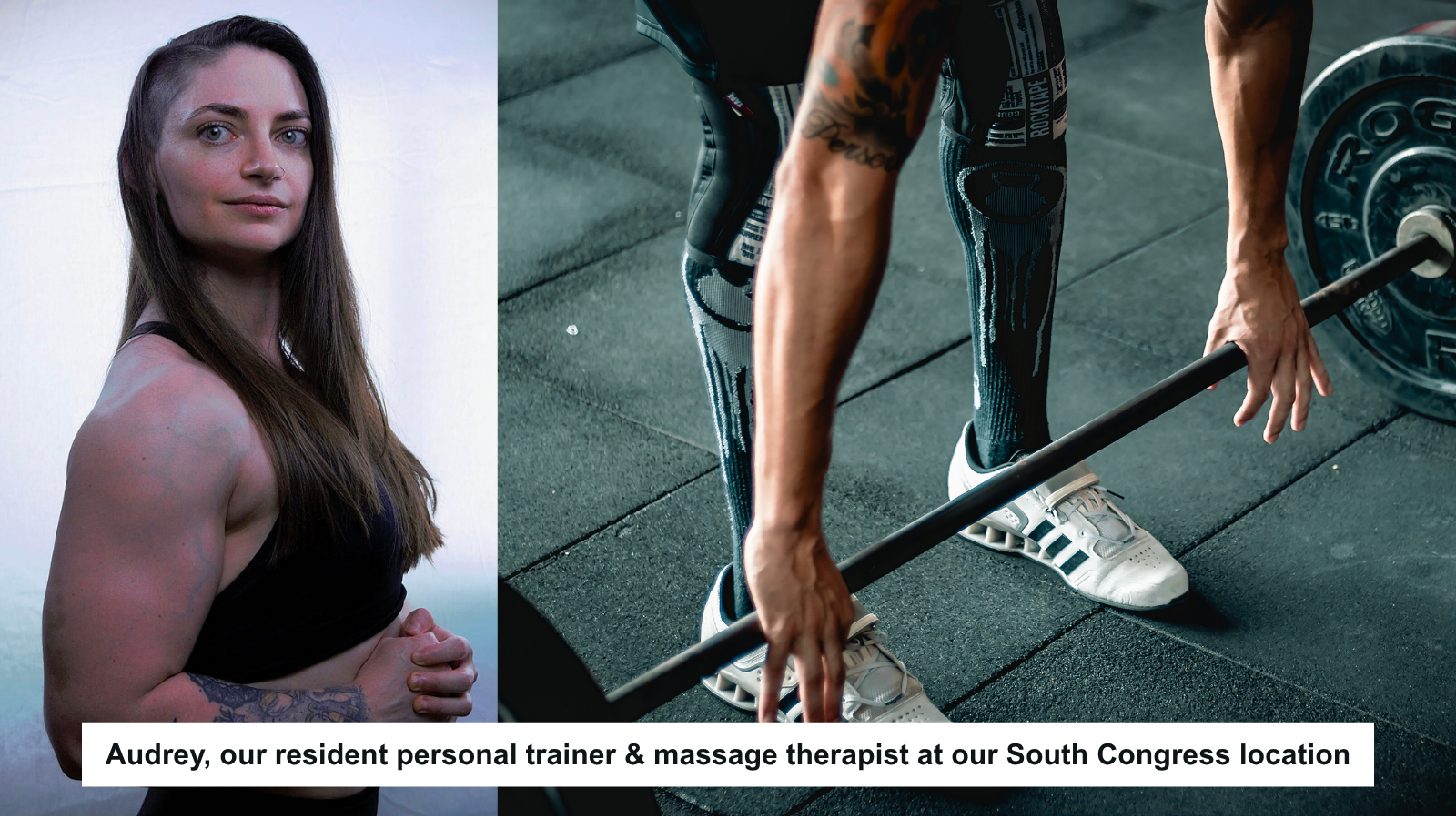
Our therapist Audrey at the South Congress Mantis location is also a personal trainer! She’s our expert when it comes to fitness and building strength. Audrey was kind enough to share her insights on recovery and massage as integral part of fitness. Read on below!
As I’ve gotten more serious about bodybuilding and gained more experience as a personal trainer, my perspective on training has changed. I’ve learned that more training doesn’t always mean more progress. In fact, recovery deserves just as much attention as training itself, if not more.
I used to lift for about an hour and a half, six days a week. Now I lift for about an hour, five days a week.
Ironically, I’ve seen better muscle growth by giving my body more time to recover than I ever did by simply spending more time in the gym. To me, recovery isn’t just about taking a day off from the gym. It’s about doing what you can to help your body recover and perform at its best between workouts.
This is where massage comes in. Both through my own training and by observing clients, I’ve seen how much recovery can affect the way someone moves and performs. Massage has become one of the tools I use to support that recovery, helping me move comfortably, maintain my range of motion, and prepare for my next workout.
How Massage Prepares Me For My Next Workout
When I lift, I’m intentionally challenging my muscles so my body has a reason to adapt and become stronger. But the workout itself is only one part of that process. As a personal trainer, this is also something I emphasize with clients: what you do between workouts matters too. Nutrition, sleep, hydration, and adequate recovery all contribute to how prepared your body is for the next workout.
Massage is one of the tools I use to support my body’s recovery between workouts. One of its immediate effects is increasing local circulation in the tissues being worked, helping deliver oxygen and nutrients while supporting the body’s normal recovery processes.
That recovery becomes especially important when it’s time to train again. When my muscles feel looser and move more comfortably, I notice that they don’t feel as stiff or fatigued going into my next workout. That allows me to train with better technique, generate more force, and feel ready to challenge my muscles again instead of feeling like I’m still recovering from the last session.
I still train five days a week, which is already toward the higher end of what many people can recover from comfortably. I don’t expect massage to magically build muscle, but I do see it as one of the tools that helps my body keep up with the demands of that training schedule so I can continue progressing.
How Massage Supports Better Movement
This is probably where I personally notice the biggest benefit from massage. Comfortable range of motion is extremely important when lifting weights. Your body needs to move comfortably through an exercise, especially as the weight gets heavier.
This is also something I pay close attention to when observing a personal-training client. Take the bench press, for example. As I watch a client lower the weight toward their chest, I’m not just looking at whether they can move the weight up and down. I’m watching how their shoulders and shoulder blades move throughout the exercise.
If their pecs, front of the shoulders, or rotator cuff muscles are particularly restricted, they may have difficulty comfortably reaching the position they need. Their body may start compensating somewhere else just to complete the movement. If they continue adding weight while repeatedly moving through a compromised position, they can place additional and unwanted stress on structures around the shoulder, including the rotator cuff tendons, biceps tendon, and shoulder joint itself.
As both a bodybuilder and personal trainer, I value having enough comfortable range of motion to perform an exercise well before adding more weight to it. That’s exactly why I pay so much attention to movement quality before worrying about increasing the weight. Massage isn’t going to prevent every injury, and feeling tight doesn’t automatically mean someone is going to get hurt. But maintaining comfortable movement helps me, and the clients I work with, perform exercises with better technique instead of relying on compensations.
A Different Way to Think About Massage
The longer I’ve been bodybuilding and working as a personal trainer, the more I’ve realized that feeling good is part of performing well. There have been plenty of times where I was strong enough to lift the weight, but tightness made the movement feel restricted or uncomfortable. I’ve found that when my body moves more freely, I can focus on lifting with better technique instead of fighting against my own mobility.
That’s one of the biggest reasons I continue getting massages. I see massage as part of my training—not something separate from it. Just like I pay attention to my workouts, nutrition, hydration, and sleep, I also pay attention to how my body moves.
As both a bodybuilder and personal trainer, I’ve learned that taking care of your body isn’t separate from training—it’s part of training. Massage has become one of the ways I help keep myself moving and performing at my best.
How Often I Get a Massage
People often ask me how often I get a massage. Because I train different muscle groups throughout the week, my entire body is being challenged over the course of my training split. I personally schedule a 90-minute massage at least once a month because that gives my massage therapist enough time to work through every major area while also giving extra attention to the muscles that need it most.
I don’t wait until something starts bothering me before scheduling a massage. I see it as part of maintaining my body so I can continue training consistently rather than trying to catch up after a problem develops.
One thing I’ve learned is that a full-body massage and a thorough full-body massage aren’t the same thing. When you strength train consistently, every major muscle group accumulates stress in different ways over the course of the week. For me, a 90-minute session gives my massage therapist enough time to address my entire body without having to rush through it, making the session feel much more specific and intentional.
I’ve learned that the more seriously you train your body, the more seriously you have to care for it. That’s a lesson that has changed the way I approach training, recovery, and long-term progress.

