
Prenatal Massage in Austin: What It Actually Feels Like (and Why More Moms-to-Be Are Trying It)
/
If you're pregnant, you might assume massage is off the table until after delivery. It's not. There are massages built specifically for a pregnant body, and plenty of good reasons to book one. Still, the questions are real. Is prenatal massage safe? Will it feel different lying on a table at six months along?
That hesitation is common, and it's worth answering plainly: what is prenatal massage actually like, and is it worth booking?
What Is Prenatal Massage, Really?
Prenatal massage is bodywork specifically adapted for pregnancy. It's not a regular massage with a pillow added. The positioning, pressure, and technique all change to account for a changing body and a second heartbeat in the room.
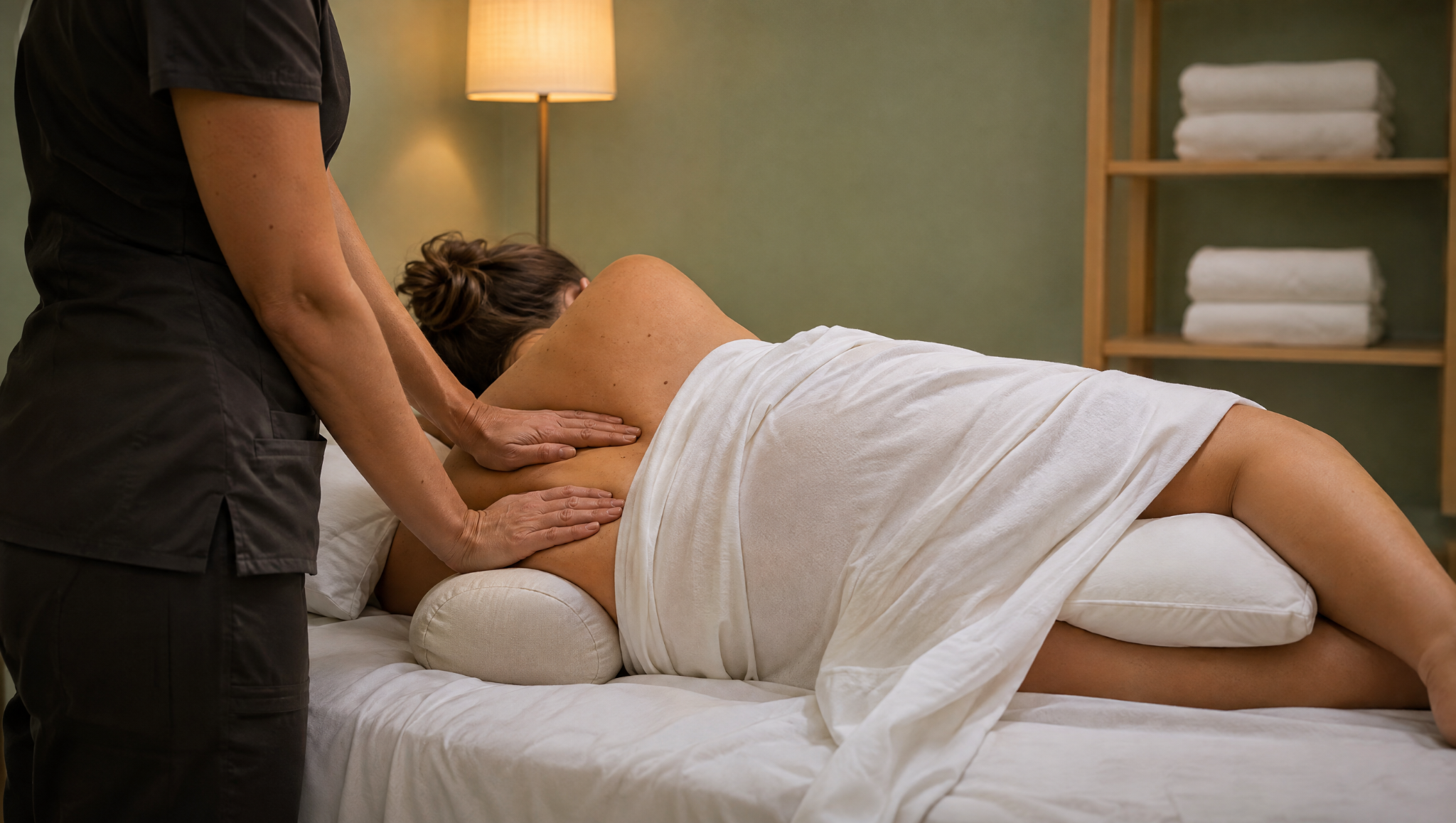
Prenatal massage typically involves side-lying positioning with supportive pillows or bolsters to keep you comfortable and avoid unnecessary pressure on your abdomen. Pressure is also generally lighter in certain areas, especially the legs, where deep work is avoided due to clotting risk concerns.
Prenatal Massage: What It Actually Feels Like
This is the part most people want to know before they book. Massage for pregnant women tends to focus on the areas that experience the most strain during pregnancy: lower back, hips, shoulders, and feet. If you've been carrying extra weight differently for months, those are usually the spots asking for relief.
Prenatal massage isn't just about taking an hour to relax, although that's certainly a benefit. It's also about giving attention to the muscles and areas of tension that are working overtime during pregnancy. At Mantis Massage, the focus is on understanding what's bothering you and adapting the session to your individual needs.
Clients describe it less as "a relaxing spa treatment" and more as "finally, someone addressed the thing that's been bothering me since week 20." The hip and lower back work in particular gets singled out, since that's where a lot of pregnancy strain concentrates as posture shifts.
The pace is thoughtful and personalized, with regular check-ins to make sure you're comfortable. Your therapist can adjust positioning, pressure, and technique throughout the session based on how you're feeling, possibly more frequently than other massages because comfort and positioning can shift mid-session as the body does.
Why Moms-to-Be Are Turning to It
A few things are driving the shift. More OBs and midwives are mentioning it as a legitimate option for pregnancy discomfort, not just a luxury add-on. Word of mouth plays a role too. Once one mom in a friend group tries prenatal massage and talks about the hip relief, others follow.
There's also a broader shift in how people think about pregnancy care. Managing swelling, back pain, and stress isn't treated as something to push through anymore. Massage for pregnant women is increasingly seen as part of actually taking care of yourself during a physically demanding nine months, not an indulgence.
Common Questions We Hear
Is it safe? Prenatal massage is generally considered safe for most people with uncomplicated pregnancies when performed by a therapist trained in prenatal techniques. It's why positioning and pressure differ from a standard massage, and it's worth confirming your therapist has that specific training before booking anywhere. However, certain pregnancy complications or medical conditions may require additional precautions. If you're experiencing a high-risk pregnancy or have concerns, check with your healthcare provider before booking.
For more info, check out what the American College of Obstetricians and Gynecologists has to say.
When can I start? Our therapists start seeing prenatal clients in their first trimester. Many other massage studios will see clients starting in the second trimester, though this varies by provider and by any pregnancy complications. If you're high-risk, check with your doctor first. This isn't medical advice, just a starting point for that conversation.
Will it hurt? It shouldn't. Pressure is adjusted to what's appropriate for pregnancy, and a good therapist checks in regularly rather than assuming yesterday's pressure is right for today.
What to Expect at Your First Session
Come in comfortable clothing, and expect a conversation first about how you're feeling, where it hurts, and what trimester you're in. Then expect to be positioned carefully, usually side-lying, and worked on at a pace that respects that your body is doing something enormous right now.
At Mantis Massage, prenatal sessions are available in 60-, 75-, and 90-minute options, so you can choose the appointment length that works best for you.
If anything feels off during the session, say so. A good therapist wants that feedback immediately, not after the fact.
The Takeaway
Prenatal massage isn't a regular massage with a disclaimer attached. It's a different approach built around what a pregnant body is actually dealing with, and the moms who try it tend to wonder why they waited. If lower back pain, hip tightness, or swelling has been part of your pregnancy, this might be worth the conversation.
Curious whether prenatal massage is right for where you're at in your pregnancy? Reach out to us at Mantis, and we'll talk through timing and what to expect, or go ahead and book your session. Our therapists are specifically trained in prenatal massage and have the award-winning track record to back it up, so you'll be in really good hands.

